Options trading is a popular financial market strategy that allows traders to speculate on the price movement of stocks, indices, commodities, and other assets without directly purchasing the underlying asset. Unlike traditional stock investing, options provide traders with flexibility and multiple ways to potentially benefit from rising or falling markets. However, options can also involve significant risk, especially for beginners.
Understanding the basic concepts of options trading is important before putting real money into the market. Traders should learn how options work, understand their risks, and develop a clear trading plan.
What Is Options Trading?
Options are financial contracts that give the buyer the right, but not the obligation, to buy or sell an underlying asset at a predetermined price before or on a specific expiration date. The predetermined price is known as the strike price.
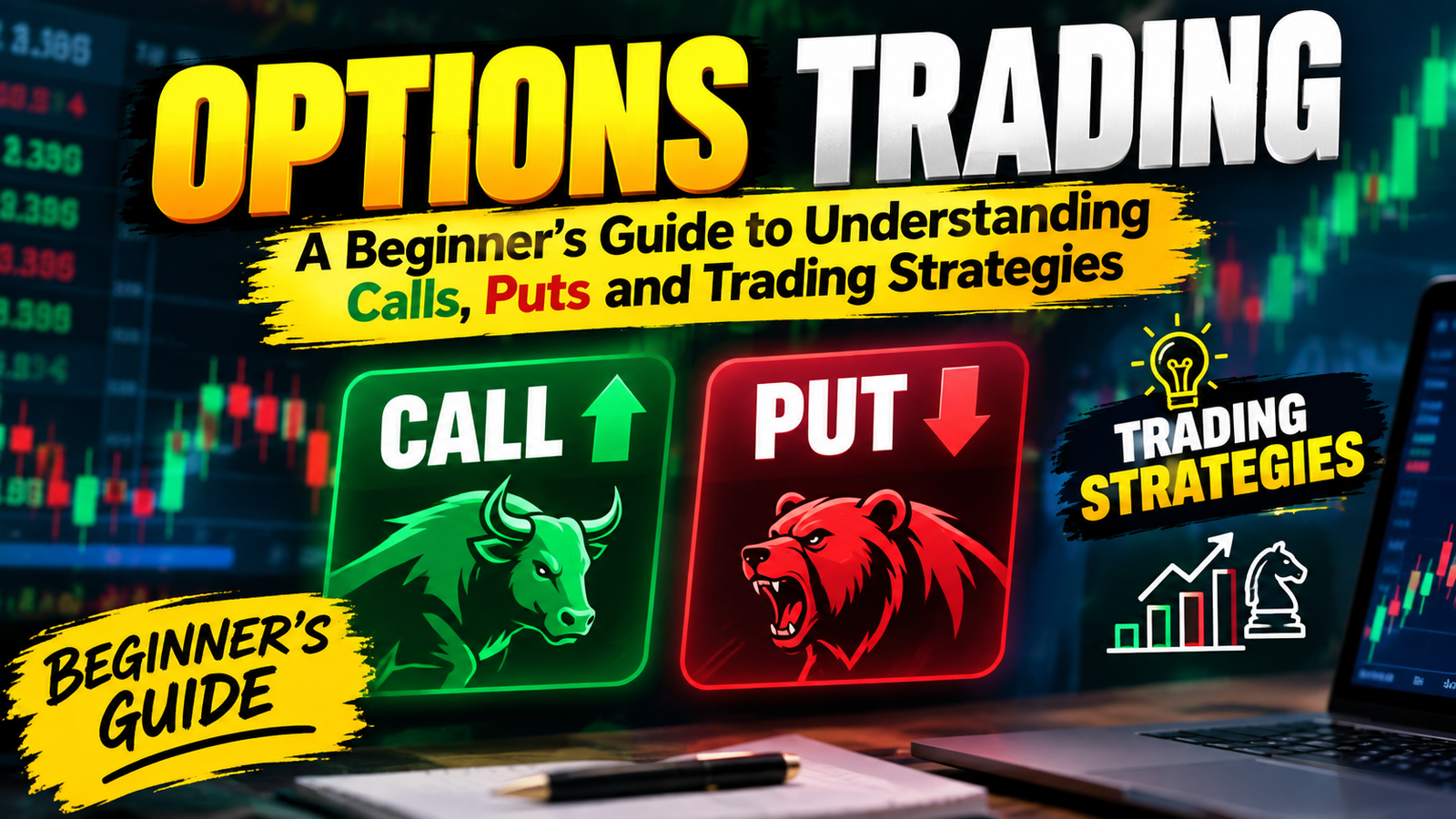
There are two main types of options: Call Options and Put Options. A call option generally benefits when the price of the underlying asset rises, while a put option generally benefits when the price falls.
The buyer pays a price called the premium to purchase an option contract. The premium depends on several factors, including the underlying asset’s price, strike price, expiration period, volatility, and market conditions.
How Call and Put Options Work
A Call Option gives the buyer the right to purchase an asset at the strike price. Traders may consider call options when they expect the underlying asset to increase in value.
A Put Option gives the buyer the right to sell an asset at the strike price. Traders may consider put options when they expect the underlying asset to decline.
For example, if a trader expects a stock currently trading at $100 to rise significantly, they could purchase a call option with a suitable strike price. If the stock moves higher before expiration, the option may increase in value. However, if the expected movement does not occur, the option can lose value and may expire worthless.
Popular Options Trading Strategies
Options traders use different strategies depending on their market expectations and risk tolerance. Some beginners start by learning simple strategies such as buying calls or puts.
More advanced traders may use strategies such as covered calls, protective puts, spreads, straddles, and strangles. These strategies can combine multiple options contracts to manage risk or create specific potential profit and loss structures.
Each strategy has its own advantages, risks, capital requirements, and market conditions where it may be appropriate. Traders should understand the maximum potential loss before entering any options position.
Risks and Important Things to Know
Options trading can be highly risky because options have an expiration date and can lose value quickly. Factors such as time decay, volatility, and changes in the underlying asset can significantly affect an option’s price.
Beginners should avoid risking money they cannot afford to lose and should consider using a paper-trading account to practice first. Understanding position sizing, stop-loss planning, and risk management can be important when trading options.
Options trading can provide flexibility and opportunities, but it requires knowledge, discipline, and careful risk management. Learning the fundamentals before trading with real money can help traders better understand both the potential opportunities and the risks involved.